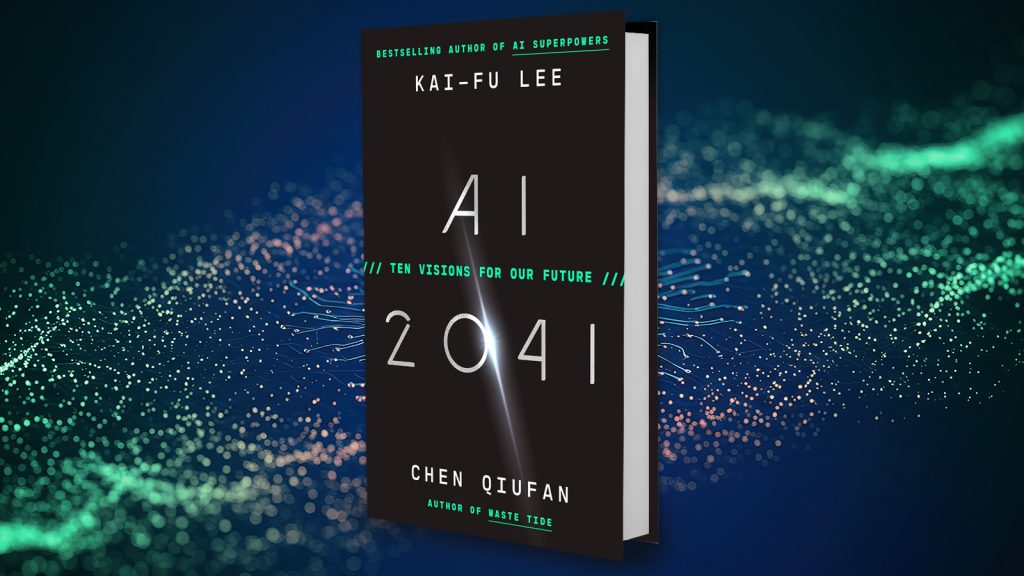
“AI 2041: Ten Visions for Our Future” is an ambitious and deeply engaging collaboration made four hands by a science fiction author and an AI scientist. Written by acclaimed writer Chen Qiufan and pioneering technologist Kai-Fu Lee, the book blends imagination with technical clarity in a way that invites me (and any reader) to genuinely envision how artificial intelligence might reshape daily life, work, and society by the year 2041.
One of the aspects I appreciate most is the structure. As I often say, there is a short novel introducing the subject, and then a very technical section explaining how that future could work. This approach makes complex emerging technologies both vivid and accessible. Each of the ten chapters opens with a fast-paced, 10-page science-fiction short story set somewhere around the globe, illustrating plausible futures shaped by AI systems, quantum servers, autonomous weapons, mixed reality, algorithmic governance, and more. These stories are followed by clear, thoughtful analysis that demystifies the underlying technologies and outlines their real-world implications.
My fascination with the intersection of imagination and engineering shines through my choice of this book. I love the balance it strikes between computing, quantum servers, and all the new technologies. Even the title resonates with me, as it comes from the idea that by 2041 quantum computing will be mature enough to accelerate AI adoption. That framing positions the text not just as speculative fiction, but as a roadmap for understanding what technological maturity could enable within the next two decades.
For leaders, especially in 2025, the book offers crucial perspective. This year, my own perception of technological change shifted. I think it will be a major social change, and we must be prepared. AI 2041 reinforces this mindset by illustrating not only the power of AI systems, but also the infrastructures, scientific leaps, and ethical challenges that will shape their impact. It urges leaders to look beyond immediate tools like chatbots and consider the broader transformations underway in industry, labor, policy, and human interaction.
Ultimately, AI 2041 is, to me, a compelling guide for anyone seeking to understand the accelerating frontier of AI. It is imaginative yet grounded, technical yet accessible—a valuable resource for leaders who want to prepare for a future that is arriving faster than we think.