
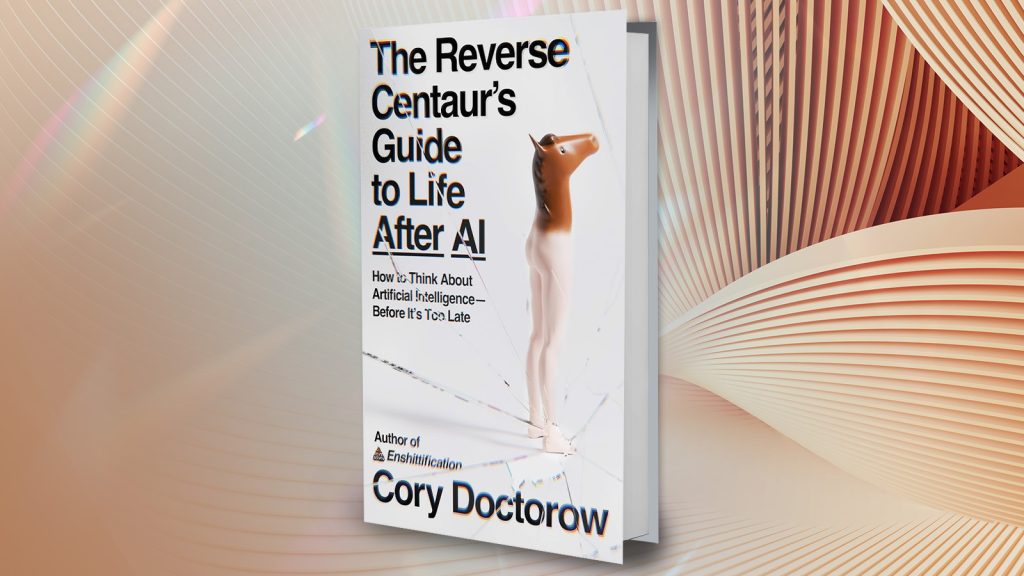
This summer, I have been spending a great deal of time on the road across the United States. Travel always gives me a little more room to read, think, and step outside the pace of daily business. One of the books I picked up along the way was Cory Doctorow’s The Reverse Centaur’s Guide to Life After AI. The book offered a thought-provoking perspective on how AI is reshaping the relationship between people, technology, and the workplace.
Doctorow uses the term “reverse centaur” to describe a person whose work is increasingly directed by a machine. The technology determines the pace, priorities, and structure of the work, leaving the individual to support the system. It is an unsettling image, and it gives language to a pattern that may become increasingly familiar as AI enters more parts of our professional and personal lives.
The book encouraged me to think more deeply about human agency. Every technology reflects the priorities and choices of the people who develop and introduce it. Leaders determine how it will be applied, what outcomes will be valued, and how it will affect the daily experience of employees. Those decisions influence how much authority people retain and how professional responsibility evolves.
These questions carry particular weight in life sciences. AI is already helping organizations interpret complex information, identify patterns, support research, and improve processes. Its applications can influence work connected to patients, healthcare systems, and public trust. Each use therefore requires careful oversight, strong governance, and people who remain accountable for the decisions being made.
For more than 3 decades of leading PQE Group, I have seen organizations navigate many periods of technological change. The introduction of a new system affects much more than operations. It can influence how people communicate, solve problems, exercise judgment, and understand their own responsibilities. Some effects appear immediately, while others become visible through experience. Leaders need to remain attentive throughout that process.
Doctorow writes with a strong and intentionally provocative point of view. I would have welcomed more attention to organizations working thoughtfully with AI, particularly within highly regulated industries. Those examples could have added another dimension to the discussion. His concerns about power, autonomy, and the future of work still deserve serious consideration.
I finished the book thinking about the choices leaders are making right now. AI will continue to become part of how we work and make decisions. We have an opportunity to shape that relationship with care and to ensure that human judgment, dignity, and accountability remain central to its development.