
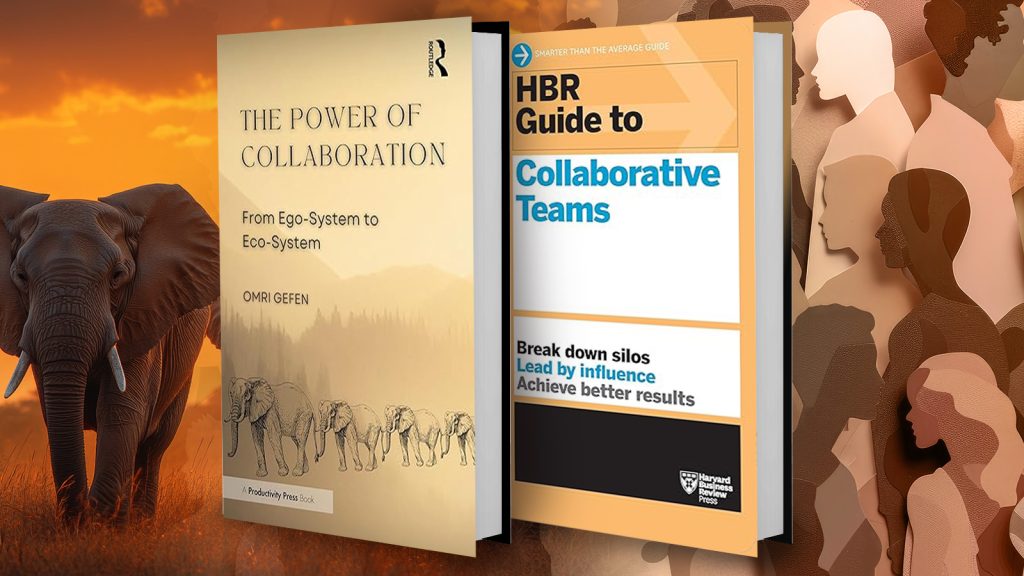
Lately, I’ve been reading books that affirm the journey we’ve taken at PQE over the past three years: transitioning from hierarchy to horizontality, from silos to shared purpose, and from control to collaboration. These aren’t abstract ideas; they’ve become the core of how we operate, grow, and lead.
Two books in particular have captured my attention.

The Power of Collaboration by Omri Gefen is a call to action. Gefen challenges us to shift from an “ego-system” to an “eco-system,” a mindset where leadership isn’t about authority, but about building trust across boundaries. In a world shaped by global challenges—from pandemics to the climate crisis—his message is urgent: collaboration is not just a management tool, it’s a human responsibility.
What I appreciated most is his concept of the “Architecture of Collaboration”—a structured yet flexible framework that gives leaders a common language for building stronger, more integrated teams.
Reading it, I felt like he was describing our own internal transformation: a deliberate dismantling of silos in favour of cross-functional teams, shared leadership, and psychological safety. So many pages are underlined. So many sentences felt like things we’ve said or needed to hear.
Complementing Gefen’s vision is the HBR Guide to Collaborative Teams—a no-nonsense manual for navigating the daily realities of working across functions.

Where Gefen inspires, this guide instructs. It covers the barriers that so often hold teams back: turf wars, misaligned priorities, unclear roles. And then it offers real strategies to move past them. I found its structure refreshingly actionable—and a helpful reminder that collaboration, like any discipline, needs tools, habits, and intention.
Together, these two books reinforce a belief I’ve held from day one: that real collaboration is not about working together more. It’s about working together better.
I highly recommend both books to anyone leading in times of complexity.