There is a particular moment in leadership when experience stops being a guarantee of clarity. You have pattern recognition, context, and scar tissue, but you also begin to realize how often those very strengths can harden into assumptions. I have learned, sometimes uncomfortably, that staying effective requires unlearning with as much discipline as learning.
My plan is to take 2026 by the horns, and as we go deeper into this year, three very different books have come to mind to help loosen ideas I thought were already settled. Not by contradicting them outright, but by reframing how judgment evolves, especially at moments of transition and technological acceleration.
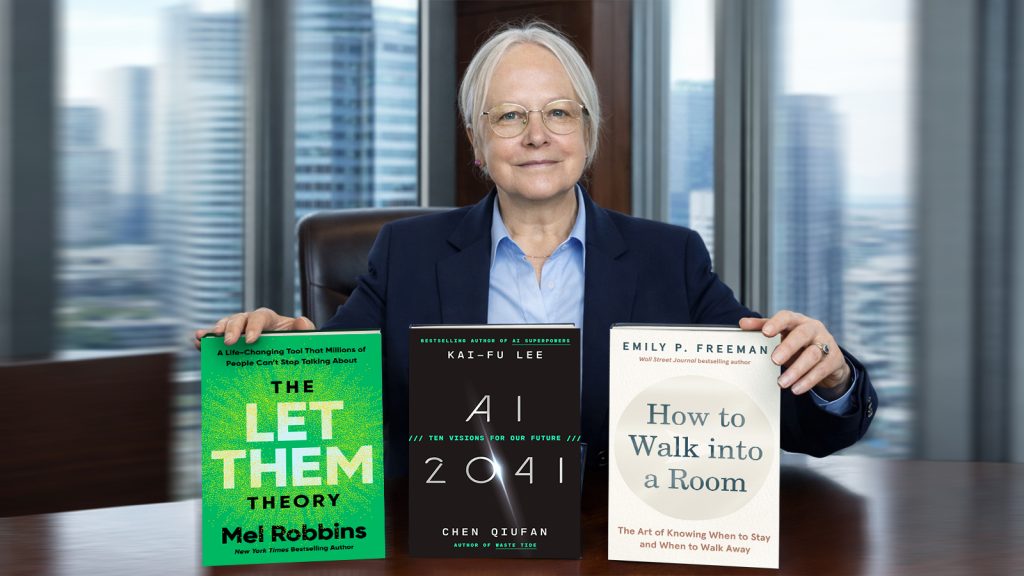
One book helped me rethink how profoundly technology reshapes society beyond the tools we see today. Another reframed how to recognize when a chapter, whether it is personal, professional, or organizational, has reached completion. The third reminded me that leadership maturity often shows up as restraint, not action.
Taken together, they offered a common thread: transition, technology, and letting go with intention, which I would like to share with you.
AI 2041: Ten Visions for Our Future reminded me that technological change is not linear but structural. What struck me most was not any single prediction, but the way imagination and engineering were woven together. Each speculative story, followed by rigorous technical explanation, made one thing clear: the real shift is not AI itself, but how quickly mature technologies reshape human systems—labor, governance, ethics, and trust. As a leader, I realized I must stop thinking of AI as a category of tools and start engaging with it as a societal force. That realization has reshaped how I think about preparedness, responsibility, and humility in the face of what we do not yet fully understand.
How to Walk into a Room: The Art of Knowing When to Stay and When to Walk Away challenged the idea that persistence is always virtuous. In Life Sciences, endurance is celebrated. But this book reframes endings as signals of evolution rather than failure. It gave language to something I have felt often but rarely named, that discernment matters more than velocity. Knowing when to stay, when to pivot, and how to leave well is not a weakness. It is leadership. I have found myself applying this lens not just to roles or projects, but to outdated beliefs about myself and how I show up.
The Let Them Theory quietly dismantled one of the hardest habits to release, which is the instinct to intervene. After decades of responsibility, it becomes tempting to equate engagement with control. This book reinforced a truth I have learned repeatedly, that progress accelerates when leaders choose where not to apply pressure. Letting people, systems, and decisions unfold creates space for accountability, maturity, and trust. Especially in complex, regulated, global environments, restraint is not passive. It is strategic.
None of these books offered answers in the traditional sense. What they offered was recalibration. As s a CEO, a learner, and a global citizen, I am carrying a lighter grip on certainty. I am more attentive to transitions, more respectful of technological force, and more intentional about where my energy truly belongs.
Learning, I’ve realized, doesn’t just add insight. At its best, it reshapes judgment.